
Motor clicks but does not move
A click without movement may come from a stripped drive gear, a seized trolley, a failed capacitor, a locked door or a door that is too difficult for the opener to lift.
Serving Dade City, Florida & surrounding areas
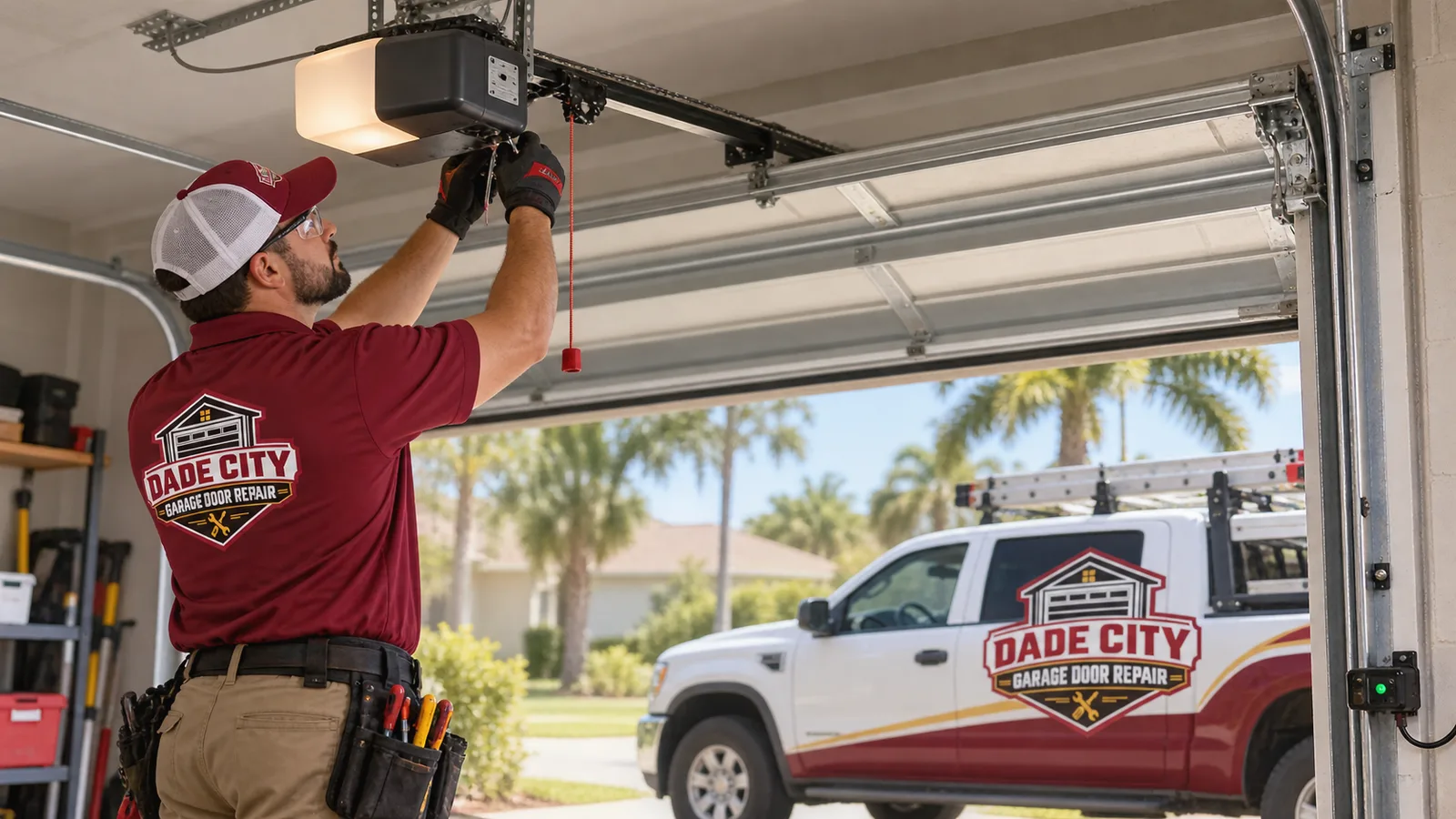
Get a clear diagnosis for an opener that clicks, stalls, reverses, runs noisily or no longer responds to its controls.
Garage door opener repair in Dade City, FL starts by separating an opener fault from a problem with the door itself. Dade City Garage Door Repair checks the motor unit, rail, drive system, travel settings, safety sensors and controls before recommending work. That matters because a clicking motor can point to several causes, while a door that reverses may be responding to sensor alignment, excess resistance or an incorrect force setting.
The door should also move without binding when disconnected from the opener. A heavy, binding or unbalanced door puts extra strain on the motor and may indicate that the door system needs attention rather than repeated opener adjustments. When the problem involves rollers, tracks, cables, hinges or the door's movement, broader garage door repair in Dade City may be part of the correct scope.
Florida heat, humidity and wind-driven rain can affect electronics, outdoor keypads and sensor connections. Lightning and utility disturbances can also damage control boards or erase programmed settings. A useful inspection follows the symptoms instead of assuming the motor has failed.
Garage door opener not responding in Dade City?
CALL NOW: (352) 424-6904A click without movement may come from a stripped drive gear, a seized trolley, a failed capacitor, a locked door or a door that is too difficult for the opener to lift.
The safety eyes may be blocked, out of alignment or affected by loose wiring. Resistance in the tracks and incorrect travel or force settings can cause similar behavior.
The batteries, lock mode, antenna, programming and receiver are checked. Outdoor keypads are also inspected for moisture, worn buttons and damaged housings.
Correct tension matters. An over-tightened chain or belt can strain bearings and sprockets, while excessive slack can cause rattling, jerky travel or trolley problems.
A disconnected trolley, stripped gear, broken coupler or failed drive component may let the motor run without transferring motion to the door.
Diagnostic light patterns, wall control wiring, photo-eye wiring, limits and the logic board help narrow down intermittent or unexplained operation.
Repair often makes sense when the opener is otherwise suitable for the door and the fault is limited to a serviceable part. Common repair targets include drive gears, sprockets, trolleys, capacitors, safety sensors, wiring, wall controls and remote programming. Chain-drive, belt-drive and screw-drive units have different wear points, so the model and symptoms both matter.
Replacement may be the better choice when the motor or logic board has major damage, compatible parts are unavailable, the rail has extensive wear or several components are failing at once. Older units may also lack current safety functions or dependable control options. The decision should compare the repair scope with the opener's age, condition, parts support and suitability for the door.
Dade City Garage Door Repair can inspect the complete operating system and explain which fault was found. That keeps a minor sensor or control issue from being mistaken for a failed motor, and it avoids repairing the opener when a binding door is the underlying cause.
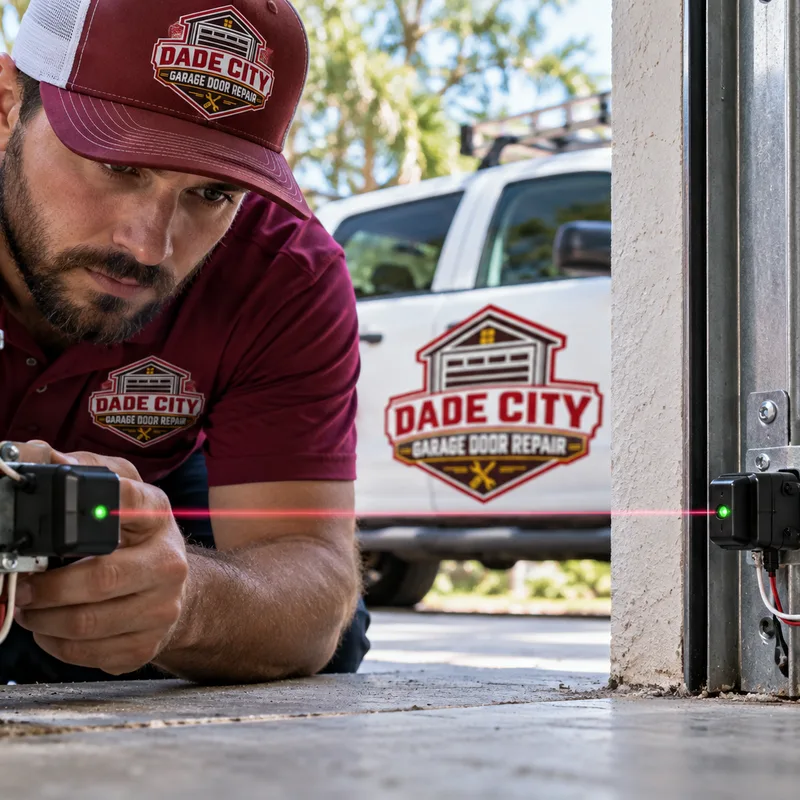
Tell Dade City Garage Door Repair what the unit does, what sound it makes and whether the wall control, remote and keypad produce different results. Intermittent faults are easier to trace when the sequence is clear.
The inspection covers manual door movement, balance, tracks, trolley engagement, rail condition, drive tension, safety-eye alignment, wiring and visible wear inside the motor unit.
Power, controls, diagnostic indicators, travel limits and safety reversal are checked as appropriate. Batteries and programming are ruled out before more involved work is proposed.
You receive an explanation of the fault, the parts involved and whether repair or replacement is the more practical route. The work proceeds only after the scope is understood.
After service, the opener is cycled and its controls are tested. The final check includes travel, stopping points, trolley engagement and the photo-eye reversal function.
Photoelectric safety sensors are mounted near the floor and project an invisible beam across the door opening. If the beam is interrupted or the sensors lose alignment, a closing door should reverse. Dirty lenses, loose brackets, damaged low-voltage wire and direct sunlight at certain times of day can interfere with the signal. Florida humidity can also contribute to corrosion at exposed connections.
Travel limits tell the opener where to stop. Incorrect limits can leave the door short of the floor or make it press down and reverse. Force controls are not a proper fix for a door that binds. Raising the force to overpower resistance can mask worn rollers, track trouble or poor balance and place more load on the drive system.
Never bypass or permanently hold down a control to defeat a safety response. If the door will not close normally, keep people and vehicles clear of the opening and arrange a diagnosis.
Start with the basics if it is safe to do so. Confirm that the opener has power and that its plug has not worked loose. Test the wall control as well as the remote. If the wall control works but a remote does not, replace the remote battery and check whether the opener's lock or vacation mode is active.
Wipe the safety-eye lenses with a soft cloth and remove anything blocking the beam. Look for a blinking indicator, a sensor bracket that was bumped or a wire that has come loose. Check that the manual release trolley is engaged if the door was recently operated by hand. Do not adjust springs, cables or bottom brackets; those parts can remain under substantial tension.
Stop testing if the opener hums repeatedly, smells hot, produces smoke, drops metal or pulls against a door that will not move. Unplug the unit if you can reach the plug safely. A door that is crooked, unusually heavy or supported by a damaged cable should not be operated with the motor.
A symptom-focused inspection can identify whether the trouble is in the motor unit, controls, safety sensors, drive system or the door itself.
CALL NOW: (352) 424-6904Many opener faults can be diagnosed during one service visit, but completion depends on the failed part and its availability. Sensor alignment, programming and common adjustments may be handled promptly, while model-specific control boards, gears or rails may require a compatible replacement part.
A clicking opener may have a failed capacitor, stripped gear, jammed trolley, electrical fault or a door that is too heavy for the motor to move. Dade City Garage Door Repair checks manual door movement and the drive assembly before treating the click as proof that the entire opener needs replacement.
Sometimes, but the extent of electrical damage determines whether repair is practical. In west-central Florida, storm-related power disturbances can affect logic boards, receivers and programmed controls; diagnosis should include the outlet, motor response, diagnostic indicators and connected accessories.
That behavior commonly points to a safety-sensor problem. The photo eyes may be blocked, misaligned, loosely wired or damaged, and holding the wall control may override normal remote closing on some units. The sensors and wiring should be corrected rather than bypassed.
Chain-drive and belt-drive units can both be diagnosed and may be repairable when compatible parts are available. The inspection considers tension, trolley movement, sprockets, gears, pulleys, rail condition and the specific motor-unit model.
Repair is usually worth considering when the fault is isolated, parts remain available and the opener is properly matched to a sound door. Replacement becomes more practical when major electronics or drive components have failed, several parts are worn or the existing unit lacks dependable safety operation.
The likely causes include depleted batteries, lock mode, lost programming, a damaged remote, keypad wear or a receiver problem. Outdoor keypads in Dade City's humid climate should also be checked for moisture intrusion and corroded battery contacts.
Call Dade City Garage Door Repair for service when the opener or its controls stop operating correctly.